
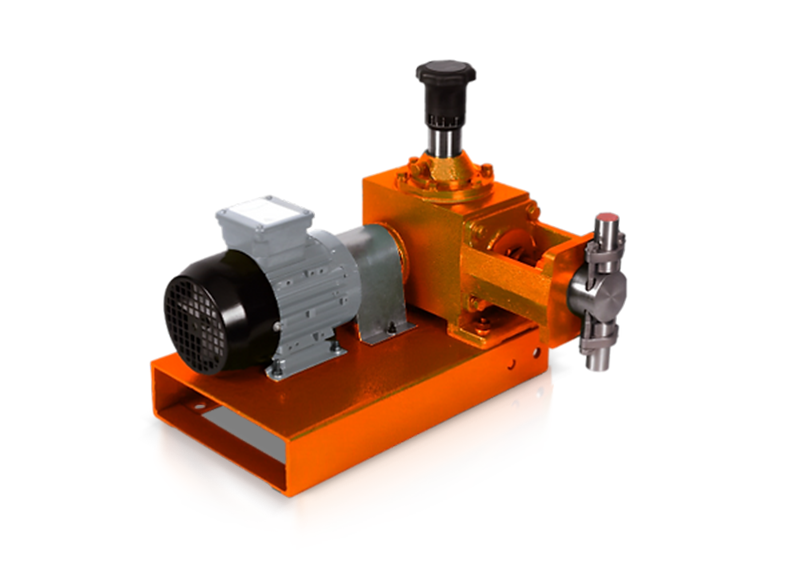
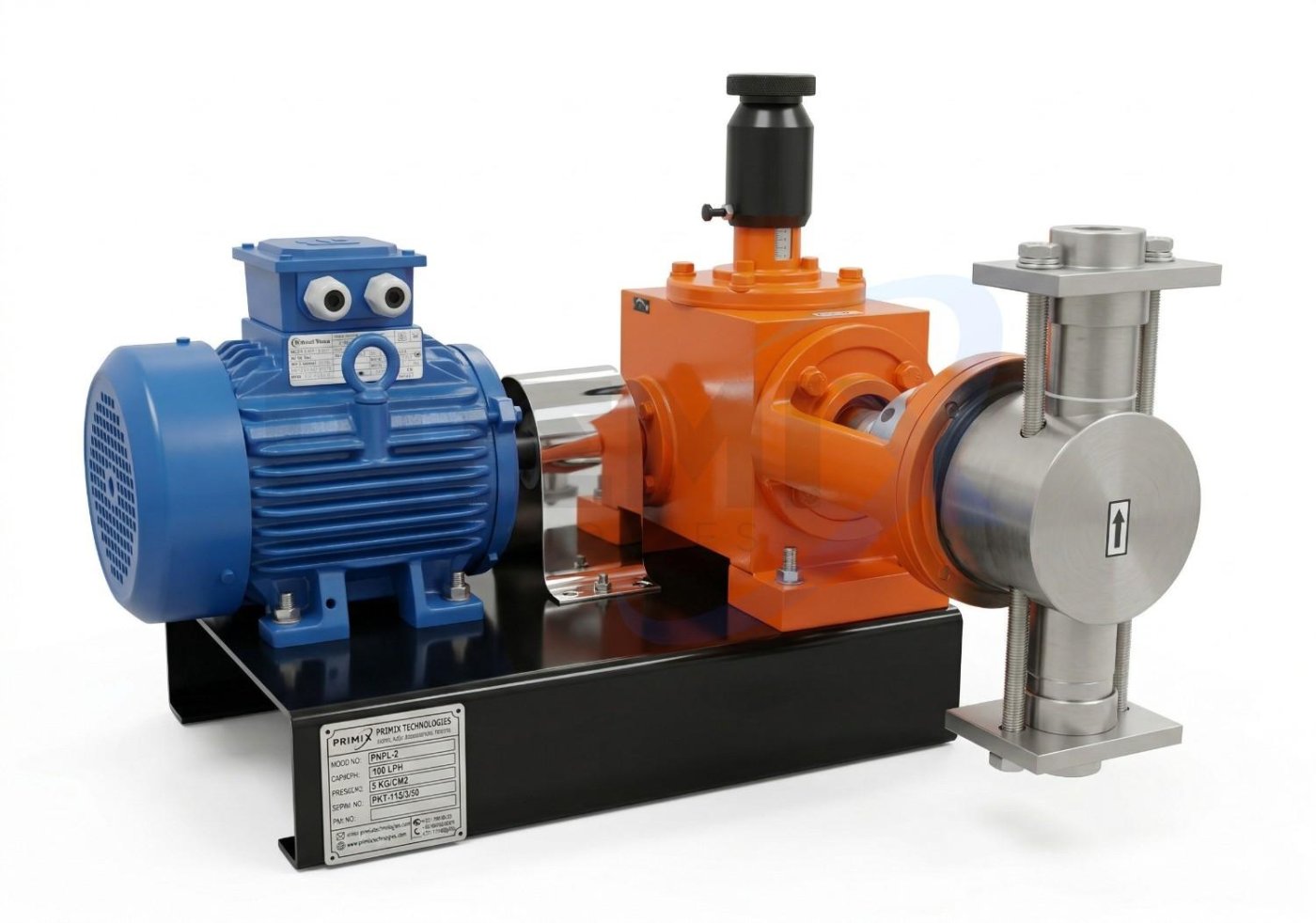
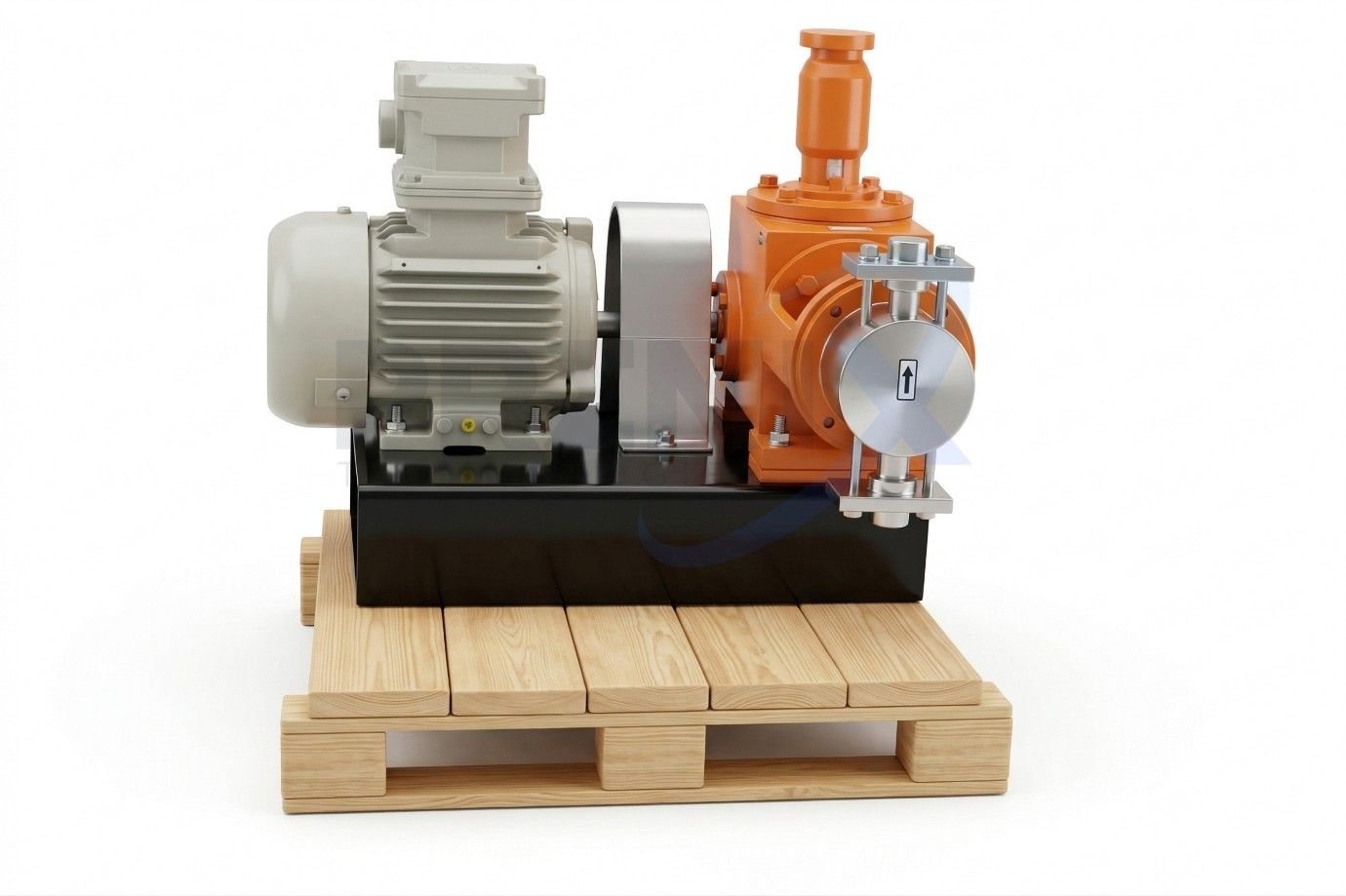
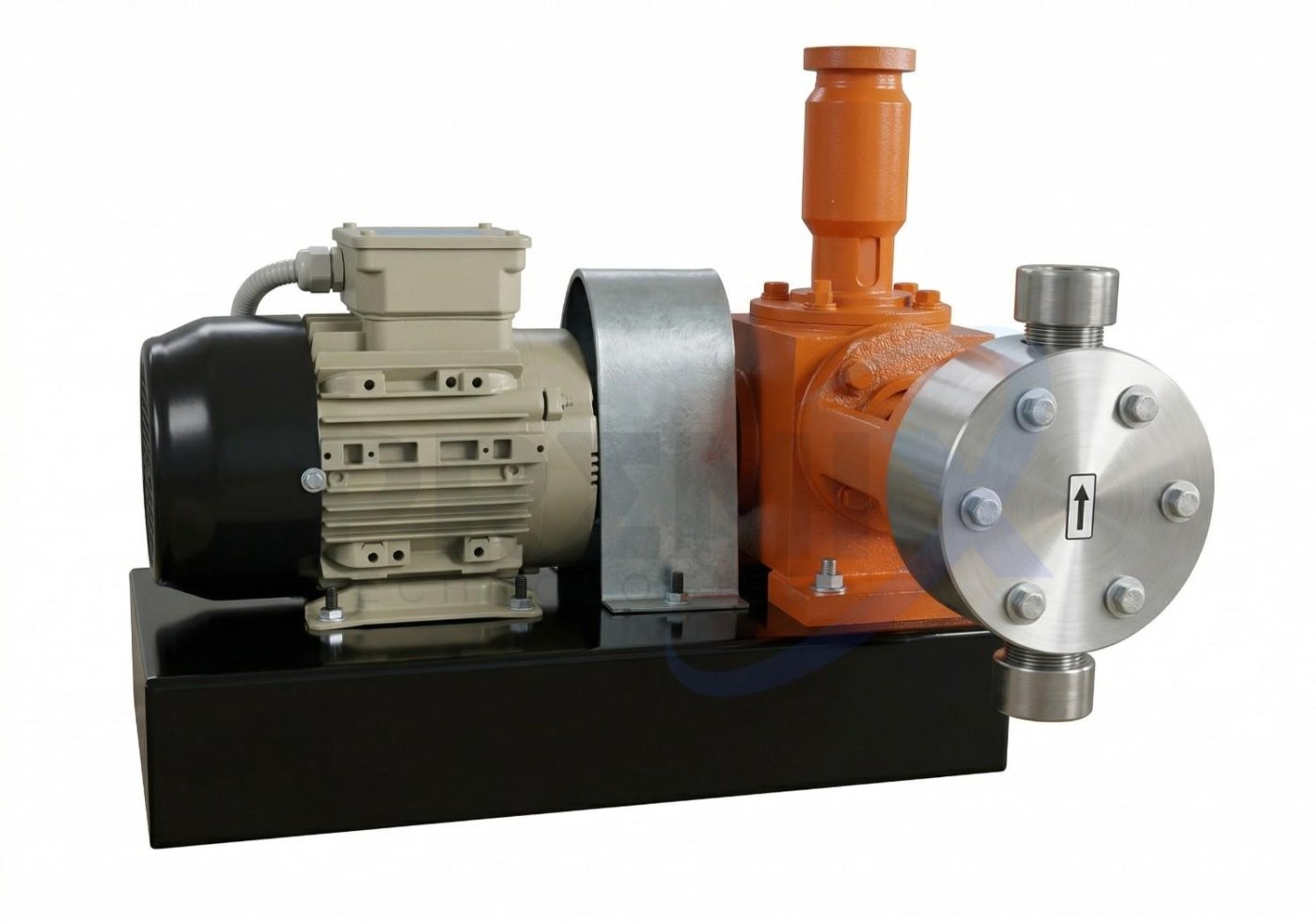
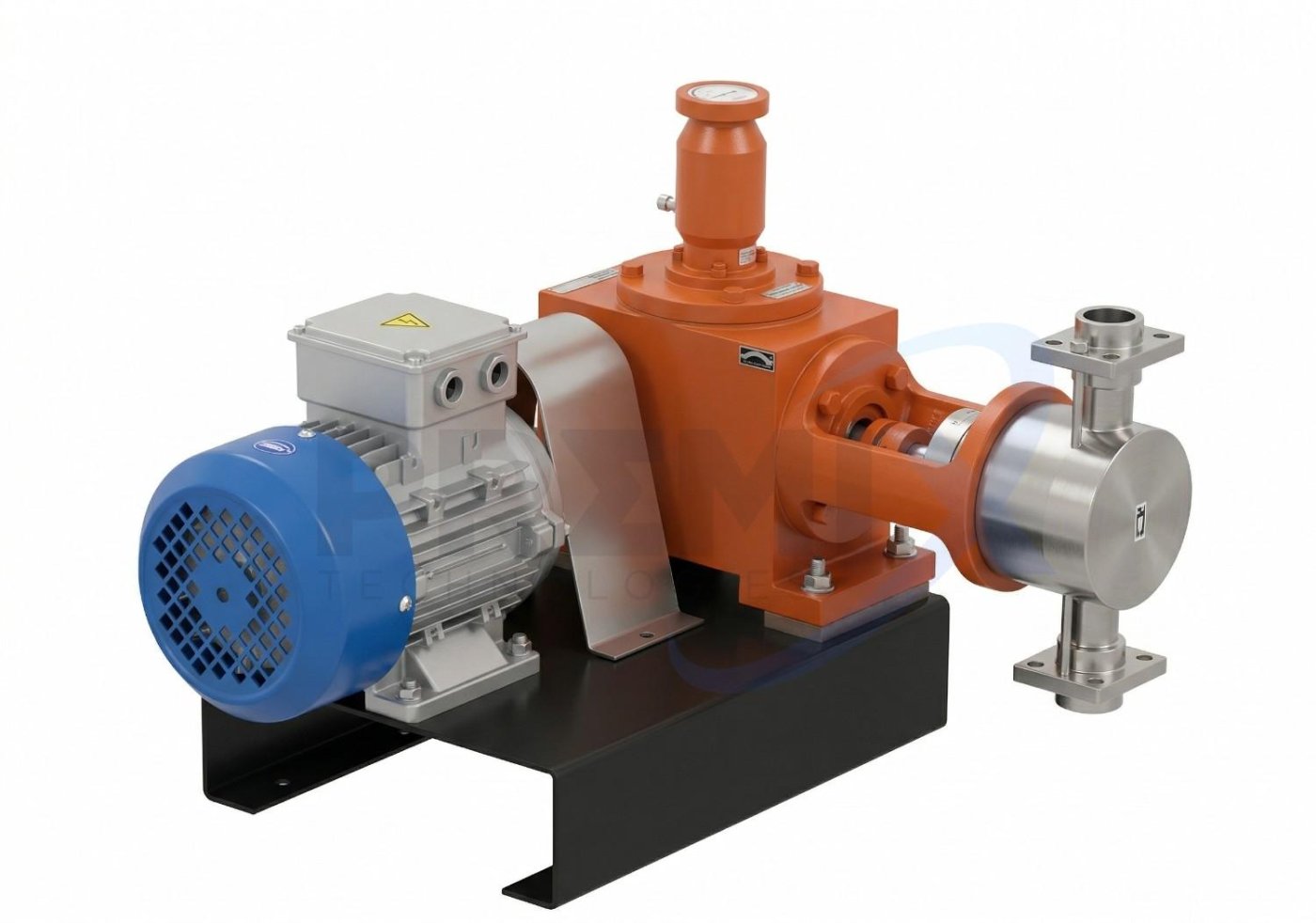
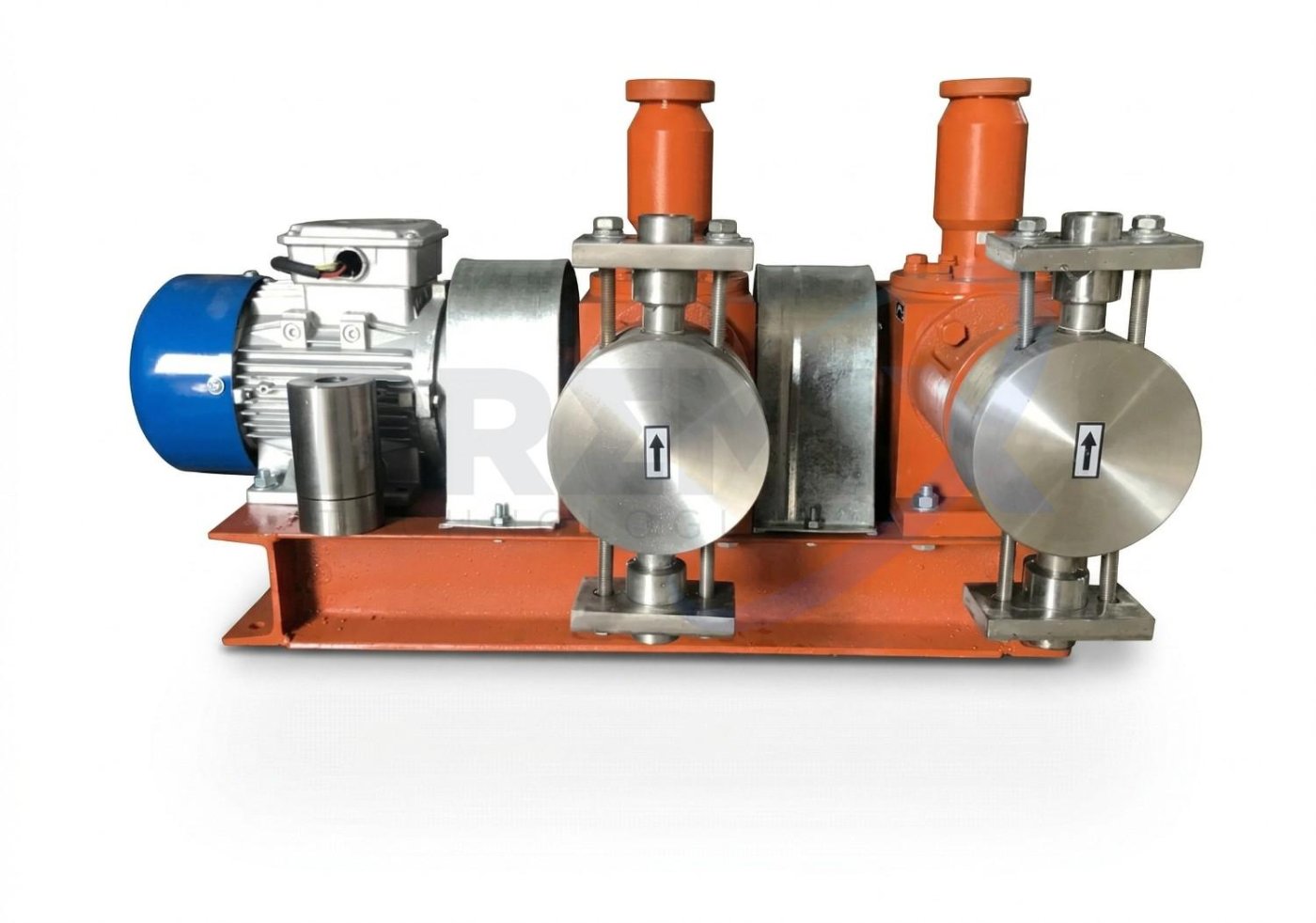
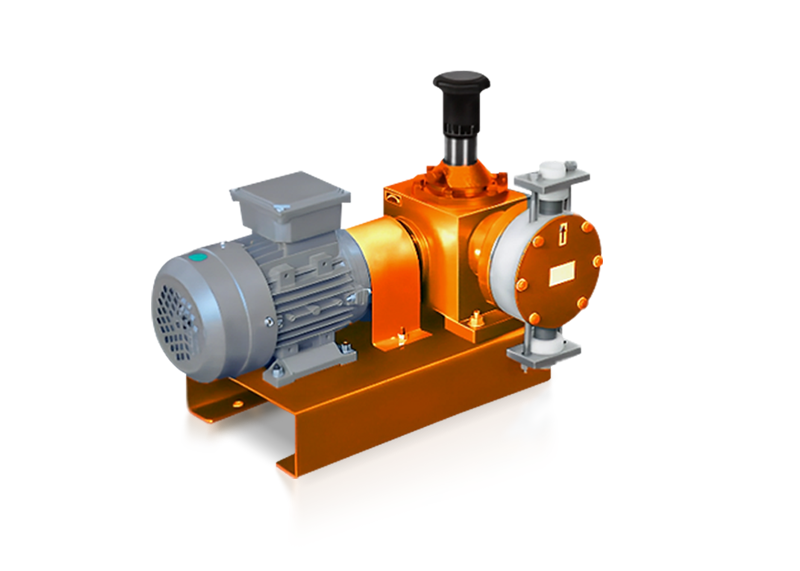
Mechanically Actuated Diaphragm Pump
Robust diaphragm dosing pump for accurate chemical metering, reliable stroke control and continuous industrial dosing duty.
Learn More
| Sr. No. | Pump Model | Capacity Max (LPH) | Pressure Max (Kg/cm2) |
|---|---|---|---|
| 1 | PRPL - 1 | 250 | 90 |
| 2 | PRPL - 2 | 850 | 90 |
| 3 | PRPL - 3 | 3000 | 225 |
| 4 | PRPL - 4 | 7000 | 270 |
Plunger dosing pumps, also known as reciprocating pumps, are positive displacement pumps that are commonly used in various industrial applications. These pumps are designed to deliver precise and accurate dosages of liquids or chemicals. Here are some key features of plunger dosing pumps:
It's important to select the right plunger dosing pump for your specific application, considering factors such as the required flow rate, pressure, chemical compatibility, and the level of precision needed in dosing. Always refer to the manufacturer's specifications and guidelines for proper installation, operation, and maintenance of the dosing pump.
Plunger dosing pumps, also known as reciprocating pumps, are widely used in various industries for their accurate and precise dosing capabilities. These pumps work on the principle of a reciprocating plunger or piston that moves back and forth to displace a fixed volume of fluid with each stroke. Here are some common applications of plunger dosing pumps in different industries:
Plunger dosing pumps are preferred in these industries for their accurate and reliable dosing capabilities, which ensure consistent and controlled delivery of fluids. Their ability to handle a wide range of chemicals and provide precise flow control makes them essential tools in industrial processes requiring accurate dosing and metering.
Technical answers about pressure, flow accuracy, packing, pulsation, installation and maintenance.
It is a positive-displacement pump in which a reciprocating plunger draws and discharges a measured chemical volume.
It is commonly selected for clean chemicals requiring accurate dosing and relatively high pressure.
Yes, when the head, plunger, packing, valves and drive are rated for the service.
Packing seals around the moving plunger and is a normal wear component.
Flow is delivered in strokes, so a dampener and stable back pressure may be required.
By stroke length, stroke frequency or speed, depending on the model.
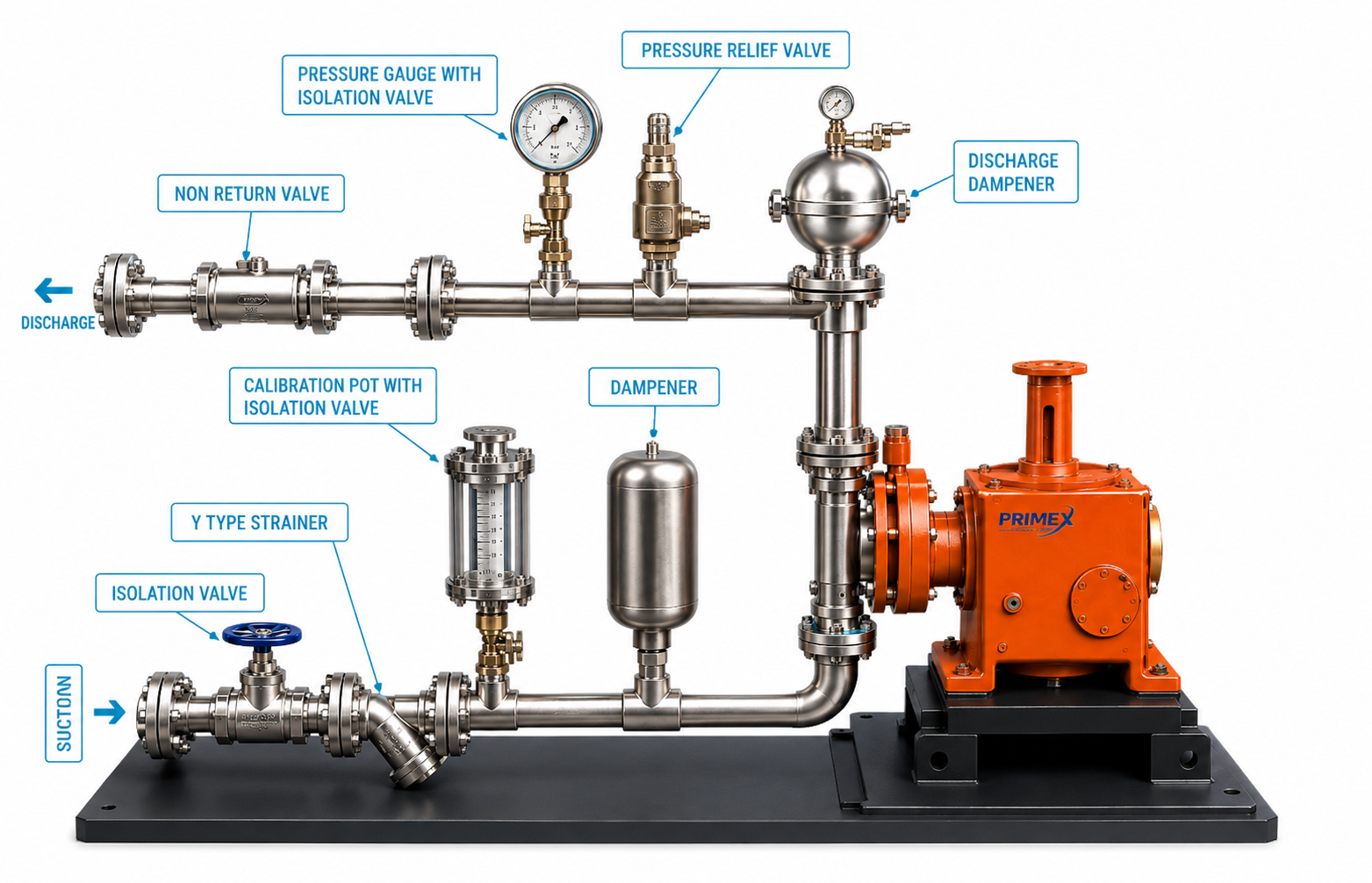
Typical accessories include relief valve, gauge, calibration column, dampener, back-pressure valve and injection quill.
Air entry, poor suction, dirty valves, high viscosity and insufficient back pressure are common causes.
Yes, with compatible plunger, head, valve, packing and piping materials.
Premix Technologies selects plunger pumps from flow, pressure, chemical compatibility, suction and control requirements.